
Benefits of Polyhouse Farming: 10 Major Advantages for Indian Farmers
August 21, 2026
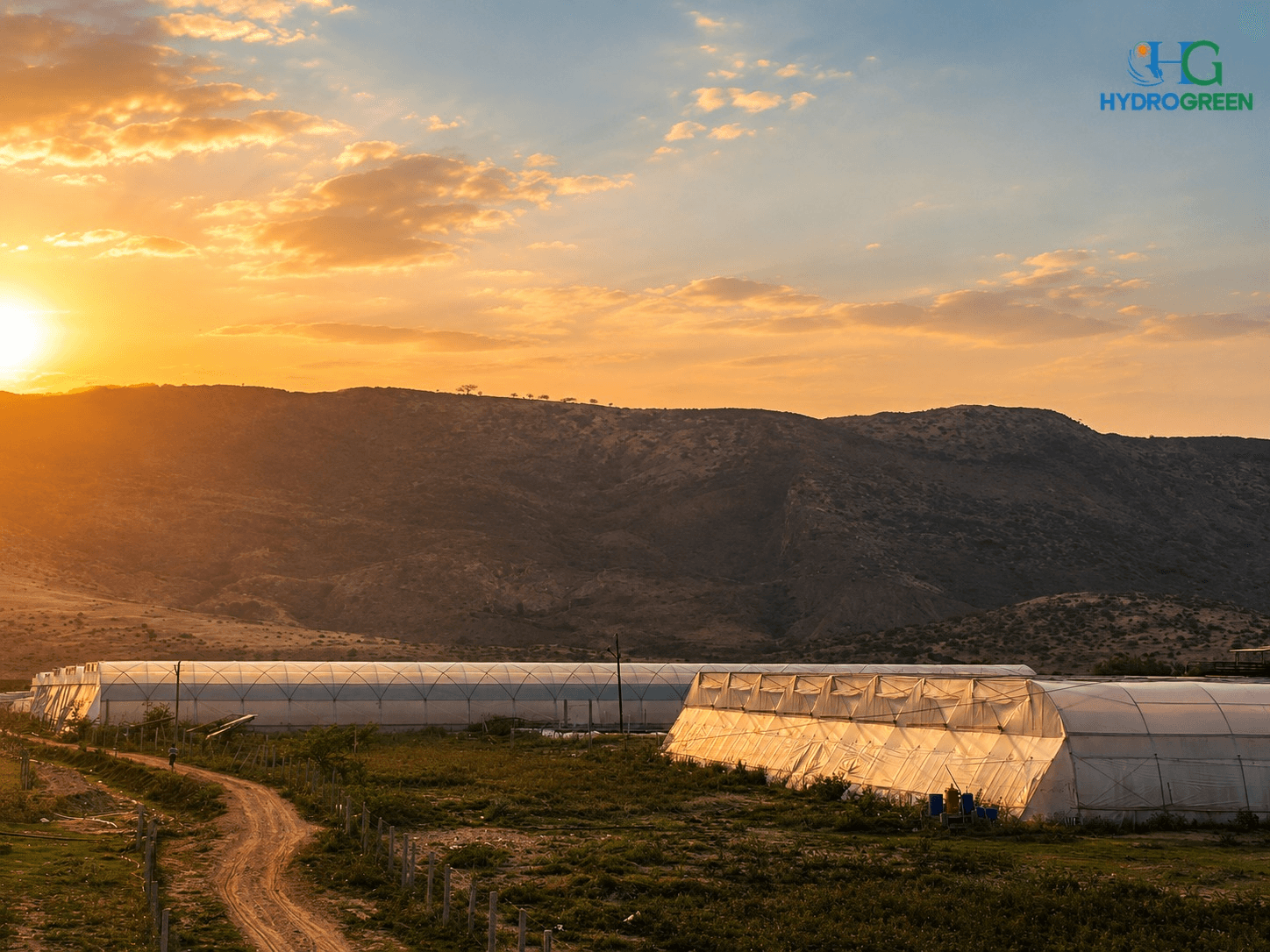
Discover the key benefits of polyhouse farming in India, including higher production potential, better crop quality, efficient water and nutrient management, weather protection, high-value crop opportunities, and improved farm income potential. Learn about suitable crops, investment, subsidy, limitations, profitability and essential steps before starting a polyhouse project.
Benefits of Polyhouse Farming: 10 Major Advantages for Indian Farmers
Polyhouse farming is becoming an important form of protected cultivation in India. Instead of leaving crops completely exposed to changing weather conditions, a polyhouse creates a more controlled growing environment where temperature, humidity, irrigation, nutrition and crop protection can be managed systematically.
For farmers, the advantage is not simply the plastic-covered structure. The real value comes from combining the right structure with the right crop, irrigation, fertigation, crop-management practices and market strategy. A well-planned polyhouse can help improve production efficiency, cultivate high-value crops, protect crops from adverse weather and make better use of land and water.
This guide explains the major benefits of polyhouse farming, its limitations, suitable crops, financial considerations and the factors farmers should evaluate before investing.
Evaluate every project using local conditions and evidence carefully.
What Is Polyhouse Farming?
A polyhouse is a protected cultivation structure covered with specialized plastic film. It creates a growing environment in which important crop conditions can be managed more effectively than in conventional open-field farming.
Depending on design and technology, a polyhouse may include UV-stabilized polyethylene covering, ventilation, insect-proof netting, drip irrigation, fertigation, fogging or misting, mulching, raised beds, crop-support systems and environmental monitoring.
1. Protection From Unfavourable Weather
One of the most important benefits of polyhouse farming is protection from direct environmental stress. Open-field crops may be affected by heavy rainfall, strong winds, excessive heat, sudden temperature changes and hailstorms. A polyhouse does not make crops completely immune to these risks, but it can reduce direct exposure and provide greater control over the growing environment.
This is especially useful for high-value crops where quality and consistency matter. In areas with difficult weather conditions, protected cultivation can make crop planning more predictable.
2. Higher Production Potential From Limited Land
Polyhouse farming can support intensive cultivation because farmers can manage plant spacing, irrigation, nutrition, crop training and environmental conditions more systematically.
However, there is no universal yield increase that applies to every crop or every polyhouse. Actual productivity depends on variety, plant population, climate, planting date, irrigation, fertigation, temperature management, pest control, pruning, training and farmer skill.
ICAR field work has demonstrated that protected cultivation can substantially improve productivity in suitable conditions. For example, an ICAR tomato demonstration in Mizoram reported considerably higher production under protected cultivation compared with the corresponding open-field season. The lesson is not that every polyhouse will double yield, but that controlled cultivation can create greater production potential when management is correct.
3. Better Water and Nutrient Management
Water is one of the most important resources in agriculture. Polyhouse projects are commonly combined with drip irrigation and fertigation, allowing water and soluble nutrients to be delivered close to the plant root zone.
This can help farmers manage irrigation more precisely, reduce unnecessary application, improve nutrient distribution and monitor crop requirements more effectively.
Water efficiency depends on crop, climate, soil or growing media, irrigation design and management. Therefore, farmers should avoid using a fixed percentage of “water saving” as a guaranteed result.
4. Better Quality and Uniformity
For high-value horticulture, producing more is only part of the objective. Buyers also care about size, colour, appearance, cleanliness, grading and consistency.
A controlled growing environment can support more uniform crop development by helping farmers manage irrigation, nutrition, training and environmental conditions.
5. Opportunity for High-Value and Off-Season Crops
Polyhouse farming is often considered for crops that have attractive market value and respond well to protected cultivation. Common examples include cucumber, capsicum, coloured capsicum, tomato, chilli, leafy vegetables, roses, gerbera, carnation, chrysanthemum and nursery plants.
One commercial opportunity is off-season production. If farmers can produce when open-field supply is lower and a reliable market exists, production timing may improve revenue potential.
However, off-season production does not guarantee premium prices. Local demand, competing supply, transportation and market conditions must be studied before selecting a crop.
6. Better Crop Planning and Management
Protected cultivation can make production planning more systematic. A farmer can organize activities such as nursery raising, transplantation, training, pruning, fertigation, crop protection, harvesting, grading and marketing around a planned crop calendar.
This changes the way farming is managed. A commercial polyhouse should be treated as a production system rather than simply as a structure.
7. Better Use of Land
Land is a valuable resource, especially for farmers operating near towns and cities. Intensive protected cultivation can allow suitable high-value crops to be produced from limited areas.
This can be relevant for farmers who have relatively small land holdings, access to reliable water, nearby markets and sufficient capital for protected cultivation.
However, land productivity should not be judged by yield alone. A project should be evaluated using revenue, operating expenses, labour, finance cost, maintenance, replacement and depreciation.
8. Better Management of Some Pest and External Risks
A properly designed polyhouse, particularly when combined with suitable insect-proof netting and sanitation, can reduce exposure to some external pest pressures. But polyhouse farming is not pest-free farming.
Pests and diseases can still enter through planting material, workers, tools, soil, irrigation systems or openings. Regular scouting, sanitation, removal of infected material, monitoring traps, biological control where appropriate and responsible pesticide use remain important.
An ICAR case from Varanasi illustrates the importance of technical management. A farmer initially faced crop failure in a naturally ventilated polyhouse, but after scientific guidance and improved practices, the farmer successfully harvested capsicum over several months and generated a reported net income. The key lesson is that a polyhouse creates a controlled environment; it does not replace agronomic knowledge.
9. Opportunity for Precision Farming
Modern polyhouse projects can integrate precision-farming practices such as drip irrigation, fertigation, soil or media testing, EC and pH monitoring, temperature monitoring, humidity monitoring and automated irrigation.
10. Potential for Better Farm Income
Income is usually the most important consideration for a farmer. Polyhouse farming can improve income potential, but profitability is never guaranteed.
A successful project generally requires the right crop, suitable structure, quality planting material, efficient irrigation and fertigation, good crop management, consistent quality, reliable marketing and controlled operating costs.
For example, an ICAR-documented coloured-capsicum case in Maharashtra reported 20 tonnes from a 3,000-square-metre polyhouse during the 2025 season, with reported gross income of ₹20 lakh and operational costs of about ₹5 lakh at that stage. This is a case study, not a guaranteed return for every farm.
Farmers should calculate net income rather than focusing only on gross sales.
Polyhouse Farming vs Open Farming
Polyhouse farming should not be considered automatically better than open farming. The two systems have different investment levels and management requirements.
Open farming generally requires lower initial capital and has simpler infrastructure, but crops remain more exposed to environmental conditions. Polyhouse farming requires higher initial investment and technical management, but provides greater control over the crop environment.
A sensible comparison includes weather exposure, environmental control, irrigation precision, crop planning, quality, labour, maintenance, capital requirement and market opportunity.
Which Crops Are Suitable?
There is no single most profitable polyhouse crop for every location. Crop selection should consider climate, structure, water, soil or growing media, market demand, crop cycle, labour, selling price and transportation.
Cucumber is popular in protected cultivation because it can be trained vertically and can fit intensive production systems. Capsicum and coloured capsicum are commonly considered high-value protected crops. Tomato can benefit from controlled irrigation, nutrition and training. Commercial flowers may benefit where quality, appearance and supply timing are important.
Polyhouse Investment and Cost
A polyhouse generally requires more initial investment than conventional open farming. Depending on project design, costs may include structure, polyfilm, insect net, drip irrigation, fertigation, water tank, pump, electrical infrastructure, crop-support systems, beds, planting material, labour and initial crop inputs.
There is no single universal “per-acre cost.” Project cost changes with area, structure type, technology level, irrigation system, crop and location.
Is Subsidy Available?
Government assistance may be available under applicable horticulture and protected-cultivation schemes, but farmers should not assume that one fixed subsidy percentage applies to every project.
Under the current MIDH Operational Guidelines 2025, the relevant project-mode category for commercial horticulture development in protected conditions provides for credit-linked subsidy of 50% of eligible project cost, subject to a maximum of ₹100 lakh per project under the stated category and conditions.
Actual eligibility, eligible components, approved cost norms, project category, state-level implementation and documentation requirements must be verified before investment.
Limitations of Polyhouse Farming
Polyhouse farming has important advantages, but it also has limitations.
First, the initial investment is higher than conventional farming. Second, technical knowledge is necessary for irrigation, fertigation, training, pruning, ventilation and pest management. Third, structures and irrigation systems require maintenance. Fourth, crop prices can change quickly. Fifth, crop failure is still possible because of poor management, disease, unsuitable climate or wrong crop selection.
Loan repayment also needs careful planning. Farmers should calculate working capital, interest, maintenance and replacement costs rather than considering only construction expenditure.
7 Things to Check Before Starting
1. Water
Test the water and confirm that sufficient supply is available throughout the crop cycle.
2. Soil
Test soil where soil-based cultivation is planned. For soilless or media-based systems, evaluate the growing medium and nutrient-management plan.
3. Market
Identify buyers and transportation options before planting.
4. Crop
Choose the crop based on local economics, not only popularity.
5. Structure
Select a design appropriate for the local climate and crop.
6. Technical Support
Ensure that reliable crop-management guidance is available.
7. Financial Model
Prepare capital cost, working capital, production, price, operating cost, loan repayment and sensitivity calculations before investing.
How to Get Maximum Benefits
The strongest results come from treating the project as one integrated system.
Start with site selection and soil and water testing. Select a crop according to climate and market demand. Design the structure for the crop and location. Install suitable irrigation and fertigation. Use quality planting material. Follow a crop calendar. Monitor plants regularly. Plan harvesting and marketing in advance. Maintain complete records of inputs, labour, production and sales.
How to Evaluate Profitability
Farmers should calculate more than gross revenue.
Gross Revenue = Marketable Production × Average Selling Price
Then calculate:
Operating Income = Gross Revenue – Operating Expenses
For a complete commercial project, also consider structure depreciation, maintenance, replacement, electricity, labour, packaging, transportation, finance cost and loan repayment.
For larger projects, useful indicators include ROI, IRR, DSCR, payback period, break-even point and sensitivity to selling price.
Is Polyhouse Farming Right for Every Farmer?
No. Polyhouse farming may be suitable for farmers who have appropriate land, reliable water, sufficient investment capacity, market access and willingness to learn technical crop management.
It may be less suitable for someone who has no reliable water source, no viable market, insufficient working capital or an expectation of guaranteed profit.
Frequently Asked Questions
What is the biggest benefit of polyhouse farming?
Greater control over the crop-growing environment, which can support better production planning, resource management and quality.
Is polyhouse farming profitable in India?
It can be profitable, but results depend on crop, yield, selling price, operating cost, investment and technical management.
Which crop is most profitable?
There is no universal answer. Cucumber, capsicum, coloured capsicum, tomato and flowers may be suitable depending on local conditions and market demand.
Does polyhouse farming save water?
Drip irrigation and fertigation can improve water-use management. Actual savings vary by crop, climate and irrigation design.
Does a polyhouse prevent pests?
No. It can reduce some external risks, but pests and diseases can still occur.
Is subsidy available?
Assistance may be available under applicable government schemes. Current guidelines and state-level conditions should be checked before investment.
How much does a polyhouse cost?
Cost depends on area, structure, technology, irrigation, crop and location. A site-specific estimate is more reliable than a generic figure.
Can I get a bank loan?
Financing may be available subject to borrower eligibility, project viability, bank appraisal, margin and applicable scheme conditions.
Is a DPR necessary?
For a commercial or financed project, a DPR is highly useful because it presents technical requirements, project cost, working capital, projected income, expenses and repayment capacity.
Conclusion
Polyhouse farming is not simply a modern replacement for traditional agriculture. It is a protected production system that can provide greater environmental control and create opportunities for intensive, high-value horticulture.
Its major benefits include better weather protection, higher production potential, more precise irrigation and nutrition, improved quality, high-value crop opportunities, better crop planning, efficient land use and potential for improved farm income.
At the same time, it requires higher investment, technical knowledge, maintenance and market planning.
The strongest project is not necessarily the biggest polyhouse. It is the project in which crop, structure, technology, management, finance and market are planned together.
For farmers, the ultimate objective should not be simply more production.
It should be:
More marketable production at a sustainable cost.
Planning a Polyhouse Project?
Hydrogreen Energy Private Limited provides polyhouse and protected-cultivation solutions for farmers and commercial agriculture projects. Before construction, evaluate your land area, location, water availability, proposed crop, investment capacity and market.
A properly planned project can then be evaluated for technical requirements, project cost, working capital and financial feasibility.
Plan the right project before you build the structure.
~ TANYA TOMAR
(PROTECTED CULTIVATION EXPERT )
Vision: To make protected cultivation more practical and understandable for farmers by connecting agricultural technology with real-world crop planning, resource efficiency and sustainable farm economics.