
Why Polyhouse Farming Matters: Importance, Benefits & Role in Modern Agriculture
August 12, 2026
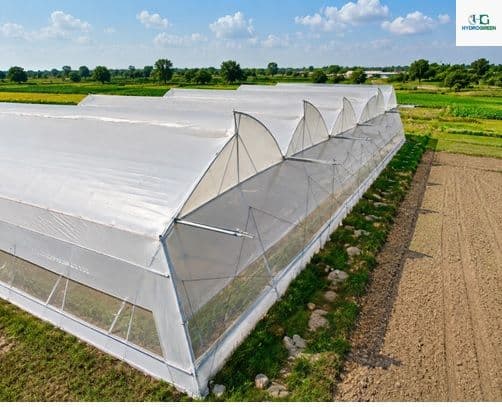
Polyhouse farming creates a more stable growing environment where crops are less exposed to external climatic fluctuations. This approach supports modern farming practices that focus on quality, efficiency, and long-term sustainability.
Introduction
For many farmers, the biggest challenge is not simply growing a crop—it is growing that crop under conditions that cannot always be controlled. Rainfall may arrive too early or too late. Temperatures may move beyond the crop's preferred range. Strong winds, excessive humidity, pest pressure and disease outbreaks can affect both yield and quality. At the same time, farmers are expected to produce more consistent, marketable crops while using land, water, nutrients and labour more efficiently. This is where polyhouse farming becomes important.
A polyhouse is a form of protected cultivation in which crops are grown inside a structure covered with a suitable transparent or translucent polymer covering. Depending on the design, the structure can provide varying levels of control over factors such as temperature, humidity, ventilation, light and crop exposure.
The objective is not to completely separate farming from nature. Rather, it is to create a more favourable growing environment and reduce the impact of external conditions.
ICAR literature describes protected cultivation as an opportunity to improve productivity and cropping intensity, particularly for high-value horticultural crops. Recent ICAR research has also highlighted its potential in regions facing water scarcity, salinity and unpredictable weather.
So, why does polyhouse farming matter?
Because it changes the farmer's relationship with the growing environment—from simply reacting to weather conditions to managing important parts of the crop-production system.
Why Is Polyhouse Farming Important?
The importance of polyhouse farming comes from its ability to provide a more protected and manageable environment for crop production. Its major advantages include:
- Better protection against adverse weather conditions
- Greater control over the crop's growing environment
- Opportunities for off-season and extended-season production
- More precise irrigation and fertigation
- Improved management of crop quality and uniformity
- Efficient use of limited cultivation space
- Scope for growing high-value horticultural crops
- Reduced exposure to some external pest and disease pressures
- Better opportunities for crop planning and market-oriented production
- Potential to make farming more resilient to climatic variability
However, a polyhouse is not an automatic guarantee of higher yield or profit. Its performance depends on crop selection, structure design, irrigation, fertigation, climate management, crop protection, technical knowledge and market planning.
1. Polyhouse Farming Gives Farmers Greater Environmental Control
In open-field agriculture, the crop is directly exposed to the surrounding environment. Temperature, rainfall, wind, humidity and solar radiation continuously influence plant growth. Farmers can manage many agricultural practices, but they cannot control the weather itself. A polyhouse introduces a protective layer between the crop and the external environment. Depending on its design and equipment, it can help farmers manage:
- Ventilation
- Temperature
- Relative humidity
- Irrigation
- Nutrient delivery
- Light exposure
- Rainfall exposure
- Insect entry
- Crop-support systems
Naturally ventilated polyhouses rely primarily on structural ventilation and natural air movement, while more advanced systems can incorporate technologies such as fans, cooling pads and automated environmental controls. The level of control therefore depends on the type of polyhouse. This distinction is important. A naturally ventilated polyhouse does not provide the same degree of environmental control as a sophisticated climate-controlled greenhouse. The value of protected cultivation lies in selecting the appropriate level of protection for the crop, climate and investment capacity.
2. It Reduces Dependence on Unpredictable Weather
Weather risk is one of the major uncertainties in agriculture. Heavy rainfall can damage flowers and fruits. Strong winds can physically affect plants. Extreme temperatures can interfere with flowering and fruit setting. Excess moisture can create favourable conditions for certain diseases. Protected cultivation cannot eliminate these risks completely, but it can reduce direct exposure to some external stresses. ICAR research from the North Eastern Hill Region has specifically highlighted fluctuating and unpredictable weather as a challenge for open-field vegetable cultivation and identified protected cultivation as an opportunity for producing high-value vegetables under more favourable growing conditions.
This makes polyhouse farming particularly relevant as farmers look for more climate-resilient production systems. The objective should not be to “defeat” the climate. It should be to reduce unnecessary exposure to climatic extremes and create better conditions for crop growth.
3. Polyhouse Farming Supports High-Value Crop Production
Not every crop is economically suitable for protected cultivation. The economics generally become more attractive when the structure is used for crops that can justify the additional investment through their value, quality, production timing or market opportunity.
Common examples of crops cultivated under protected conditions include:
- Capsicum
- Tomato
- Parthenocarpic cucumber
- Cherry tomato
- Selected leafy vegetables
- Flowers and ornamentals
- Nursery plants
- Other high-value horticultural crops
ICAR's recent work on protected cultivation in the North Eastern Hill Region identifies capsicum, tomato, parthenocarpic cucumber and cherry tomato among crops particularly suited to protected structures. Therefore, the question should not simply be:
“Can this crop grow inside a polyhouse?”
A better question is:
“Can this crop generate sufficient technical and economic value under protected conditions?”
That shift in thinking is important for successful commercial farming.
4. It Creates Opportunities for Off-Season Production
One of the most important reasons for adopting protected cultivation is the possibility of extending the production window. In open-field farming, crop calendars are strongly influenced by local weather conditions. A protected environment can provide farmers with greater flexibility in deciding when to raise nurseries, transplant crops and schedule production.This can create opportunities for:
- Early production
- Delayed production
- Off-season production
- Extended harvesting periods
- Better alignment with market demand
ICAR research notes that protected cultivation can provide opportunities for off-season production of high-value vegetables, allowing farmers to target periods when supply conditions may be more favourable. However, off-season production should never be viewed as a guaranteed premium-price strategy. Market supply, competing production regions, crop quality, transportation and buyer relationships all influence actual returns.
5. Water and Nutrient Management Become More Precise
A major advantage of modern polyhouse farming is that it can be integrated with drip irrigation and fertigation. Instead of applying water and nutrients broadly across an open field, these systems allow the grower to deliver resources closer to the crop's root zone and according to crop requirements. This becomes especially important for high-value crops where irrigation and nutrient management directly influence growth, flowering, fruit development and quality.
An ICAR study on protected cultivation in Meghalaya found that irrigation scheduling significantly affected growth and yield in tomato, capsicum and king chilli, demonstrating how closely water management is linked to performance under protected conditions. Recent ICAR research has also highlighted the potential of protected structures combined with drip fertigation and suitable management practices in areas affected by water scarcity and salinity.
Therefore, the polyhouse should not be considered only as a “covering structure.”
It is better understood as one component of an integrated production system involving:
Structure + Irrigation + Fertigation + Crop Management + Climate Management + Crop Protection
6. Better Protection Can Support Crop Quality
Commercial horticulture is not only about how much a farmer produces. Quality matters. Uniform size, appearance, cleanliness, freshness and consistency can influence market acceptance and buyer relationships. A protected environment can reduce direct exposure to rainfall, wind and certain external stresses. When combined with proper crop management, this may help growers produce more consistent crops.
ICAR's documentation on protected cultivation repeatedly identifies improved quality as one of the potential advantages of protected vegetable production. However, good quality does not come from the polyhouse alone. Seed or planting material, crop nutrition, irrigation, pruning, training, pollination, pest management, harvesting and post-harvest handling all contribute to final quality.
7. It Can Improve Productivity per Unit of Land
Land availability is an important consideration for modern horticulture. For farmers working with limited land, increasing the productive value of each unit of area can be more practical than continuously expanding cultivated acreage. Protected cultivation can support intensive production systems and, for suitable crops, can improve productivity per unit area.
ICAR literature describes protected cultivation as a promising approach for increasing productivity and cropping intensity, particularly for high-value vegetable crops.Some crops can also be trained vertically inside protected structures, allowing growers to use the available growing space more efficiently.But productivity should always be evaluated against total investment and operating cost, not yield alone.A higher production figure does not automatically mean higher profitability.
8. Polyhouse Farming Can Support More Scientific Crop Management
Another reason why polyhouse farming matters is that it encourages farmers to move toward more systematic production. Inside a commercial polyhouse, decisions about irrigation, fertigation, crop training, pruning, pest monitoring and environmental management become more structured. Farmers can maintain records of:
- Irrigation schedules
- Fertilizer applications
- Pest and disease observations
- Harvest quantities
- Crop cycles
- Input costs
- Market prices
- Labour requirements
This creates the foundation for data-driven farm management. The farmer gradually moves from simply asking, “How is my crop growing?” to asking:
“Which production conditions are giving me the best technical and economic results?” That is an important step toward precision agriculture.
9. Polyhouse Farming Creates Opportunities—but Also Requires Expertise
It is easy to focus only on the benefits of protected cultivation. The reality is more balanced. Polyhouse farming requires higher initial investment than ordinary open-field cultivation. It also requires specialised management. A poorly designed or poorly managed polyhouse can perform below expectations.
ICAR has documented cases where protected cultivation projects suffered crop losses because of inappropriate sowing time and insufficient technical knowledge. After scientific intervention and technical support, the same structure was used for successful tomato and capsicum demonstrations. This illustrates an important principle:
A polyhouse is a technology, not a shortcut.
Successful protected cultivation requires knowledge of crop biology, local climate, structure design, irrigation, fertigation, pest management and market planning.
10. Why Polyhouse Farming Matters for the Future of Indian Agriculture
India's horticulture sector is becoming increasingly important as consumer demand evolves toward diverse, quality-oriented and high-value produce.
At the same time, farmers face challenges related to climate variability, water availability, land constraints and production consistency. ICAR publications have identified protected cultivation as one pathway for improving productivity and cropping intensity of high-value vegetables.
Research from ICRIER also points to protected cultivation as a potential pathway toward crop diversification and higher-value agricultural production, while highlighting the importance of addressing high initial investment, technical knowledge, market linkages and access to institutional support. This is why the future of polyhouse farming should not be defined simply as: “More structures.” It should be defined as:
Better-planned structures + better agronomy + efficient resource management + reliable markets .
Polyhouse Farming: Benefits vs. Responsibilities:
- 🌱 Climate Protection → Requires correct structural design
- 📅 Off-Season Production → Requires an appropriate crop calendar
- 💧 Better Resource Management → Requires drip irrigation and fertigation
- 🥬 High-Value Crop Production → Requires correct crop and variety selection
- ⭐ Better Crop Quality → Requires scientific crop management
- 📈 Intensive Production → Requires skilled labour and regular monitoring
- 🛡️ Reduced External Exposure → Requires integrated pest management
- 📊 Improved Farm Planning → Requires proper record keeping and data tracking
- 💰 Potentially Better Returns → Requires market and financial planning
This balance is critical. The technology creates an opportunity, but management determines whether that opportunity is converted into a successful farm enterprise.
Hydrogreen Expert Insight: Think of a Polyhouse as a Complete Production System
From a protected-cultivation perspective, choosing a polyhouse should never begin with the structure alone. A commercially viable project should be evaluated through a connected framework:
Crop → Climate → Structure → Irrigation → Fertigation → Environmental Management → Economics → Market
For example, the structure suitable for cucumber may not be the best choice for another crop. Similarly, a design suitable for one climatic region may require modification in another.
Before establishing a project, farmers and investors should evaluate:
Crop suitability – Is the selected crop economically and technically suitable?
Climate – What environmental conditions need to be managed?
Structure – Is naturally ventilated or climate-controlled cultivation appropriate?
Water – Is adequate water of suitable quality available?
Irrigation and fertigation – Can water and nutrients be delivered precisely?
Crop protection – What pest and disease management strategy will be followed?
Labour – Are trained workers available?
Market – Who will buy the produce?
Investment – Can the project sustain the initial and recurring costs?
Technical support – Who will guide the farmer when production problems arise?
This project-based approach is more reliable than choosing a polyhouse simply because it is considered a modern farming technology.
Common Mistakes to Avoid :
1. Choosing the structure before choosing the crop
The crop should influence the structure and technology requirement—not the other way around.
2. Assuming a polyhouse guarantees profit
Profit depends on production, quality, input costs, market price, crop cycle and management.
3. Ignoring water quality
Water quantity is important, but water quality can be equally critical for fertigation-based cultivation.
4. Treating irrigation as a routine activity
Protected cultivation requires irrigation based on crop stage, environmental conditions and growing media or soil characteristics.
5. Neglecting market planning
Growing a high-value crop without identifying the target market can create serious commercial risk.
6. Underestimating technical management
Pruning, training, fertigation, pest monitoring, environmental management and harvesting require knowledge and discipline.
7. Selecting a design without considering local climate
A structure should be selected according to the crop, climate, site conditions and desired level of environmental control.
Frequently Asked Questions :
Is polyhouse farming suitable for Indian farmers?
Yes, protected cultivation can be suitable for farmers in different parts of India, particularly for high-value horticultural crops. However, suitability depends on climate, crop, water availability, investment capacity, technical skills and market access.
Why is polyhouse farming important?
The importance of polyhouse farming lies in its ability to provide a more protected growing environment, reduce exposure to adverse weather, support off-season production, improve resource management and facilitate intensive cultivation of suitable high-value crops.
Does polyhouse farming increase crop yield?
It can increase productivity for suitable crops when the structure, crop variety, irrigation, fertigation and management practices are appropriate. However, higher yield is not guaranteed simply by installing a polyhouse.
Can crops be grown throughout the year in a polyhouse?
Polyhouses can extend the crop production window and facilitate production outside conventional seasons. The actual crop calendar depends on crop requirements, local climate and the environmental control available in the structure.
Is polyhouse farming profitable?
It can be profitable, but profitability is project-specific. Initial investment, recurring costs, crop selection, yield, quality, market price, labour and technical management all influence returns.
Does polyhouse farming save water?
When integrated with efficient irrigation systems such as drip irrigation, protected cultivation can support more precise water application. Actual water savings depend on system design, irrigation scheduling, crop and management.
What crops are commonly grown in polyhouses?
High-value crops such as capsicum, tomato, parthenocarpic cucumber and cherry tomato are commonly associated with protected cultivation. Other crops and ornamentals may also be suitable depending on the structure and market.
Is technical knowledge necessary for polyhouse farming?
Yes. Technical management is an important part of successful protected cultivation. ICAR field experience has demonstrated that inadequate technical knowledge can contribute to crop failure even when a polyhouse structure is available.
How Hydrogreen Can Help?
A successful polyhouse project begins long before the structure is erected. Hydrogreen approaches protected cultivation as an integrated agricultural infrastructure project rather than simply supplying a covered structure. The planning process can consider the crop, site conditions, climatic requirements, structure type, irrigation and fertigation needs, cultivation practices and project economics together.
For farmers, agripreneurs and investors considering protected cultivation, this approach helps connect the physical infrastructure with the actual production objective.
Depending on project requirements, Hydrogreen's protected-cultivation solutions can be considered alongside related systems such as polyhouses, net houses, irrigation and fertigation infrastructure and other agricultural project requirements. The most important question is not simply:
“Should I build a polyhouse?” It is:
“What kind of protected-cultivation system makes technical and economic sense for my crop, climate and market?” Planning a protected-cultivation project? Explore Hydrogreen's solutions or connect with the Hydrogreen team to discuss your project requirements.
Conclusion:
The importance of polyhouse farming goes beyond protecting crops with a plastic covering. Its real value lies in creating a more manageable production environment where farmers can make better decisions about when to grow, what to grow and how to manage water, nutrients, climate and crop protection. For suitable high-value crops, protected cultivation can create opportunities for improved productivity, better quality, extended production windows and more efficient resource management. At the same time, it demands greater planning, investment, technical knowledge and market awareness.
The future of polyhouse farming in India will therefore depend not only on expanding protected structures, but on building well-designed, well-managed and commercially planned agricultural systems. For farmers looking toward modern horticulture, the polyhouse is not the end solution. It is the infrastructure that can make a more controlled, precise and market-oriented approach to farming possible.
~TANYA TOMAR
(Protected Cultivation Expert)
Vision: Helping farmers understand protected cultivation as a complete production system—where the right structure, crop, resources and market strategy work together to build more informed agricultural decisions.